
by Rebecca Laes-Kushner, David Aled Williams and Barret Mbuvi Kamunzu
Rebecca Laes-Kushner is an NGO consultant, providing research, data analysis, MEAL and training services to NGOs in developing countries.
David Aled Williams, PhD is a Principal Adviser at the U4 Anti-Corruption Resource Centre and a Senior Researcher at the Chr. Michelsen Institute in Norway.
Barret Kamunzu is a researcher and MEAL practitioner based in Kenya, supporting programs across East Africa, with extensive experience in donor-funded projects and refugee programs.
Why we wrote this blog
Politicians taking bribes. Contractors hired through political connections. Land grabbing and evictions of residents. Funds diverted through ghost projects. Embezzlement. Project locations chosen for political advantage rather than local needs. Harassment of residents who question a project. These forms of monetary and non-monetary corruption can undermine climate adaptation and mitigation projects by diverting resources, excluding communities and weakening the benefits funding is intended to deliver. The question for international donors such as multilateral banks and official development assistance (ODA) and NGOs who fund or implement projects is how to identify these risks early, check what happens during delivery and act when concerns arise.
The development finance landscape is currently undergoing profound shifts. ODA grants and bilateral cooperation are, in general, diminishing. Scarce resources are instead channeled into multilateral cooperation, while development finance institutions such as development banks are taking an increasing share of ODA. These shifts are changing the aid delivery landscape, adding new actors and complexity, including in climate financing. As these shifts occur, it is vital that anti-corruption learning keeps pace so that climate adaptation and mitigation projects stand the best chance of reaching their goals. A 2021 UK Independent Commission on Aid Impact assessment of ODA-spending departments recommended that they should review and streamline external whistleblowing and complaints reporting systems and procedures and provide more training to delivery partners down the delivery chain on how to report safely.
This article brings together accounts gathered through Rebecca’s exploratory quantitative survey and key informant interviews, Barret’s firsthand experience of program delivery and verification in Kenya, and Aled’s research on structural causes of corruption, common types and procedures that can avert corruption.* The accounts illustrate how corruption risks arise and how organizations might respond; they do not establish how widespread these practices are.
*Interviewees are identified by pseudonyms; the authors contribute under their own names.
Barret, on whether donors know about corruption
Either they don’t know, which means they don’t do proper project management work, they don’t go down to the ground level and don’t get stories directly from beneficiaries.
Or they do know and either can’t do anything about it or maybe they’re part of the scheme.
If you gave funding to the government and the government didn’t live up to your expectations, then why give them more money?
Are you benefitting from it? Is it a symbiotic relationship, mutually beneficial?
Brief introduction to corruption
Corruption can occur in the financing stage, during project management and in evaluation of projects.
Climate finance is particularly vulnerable to corruption for three main reasons.
-
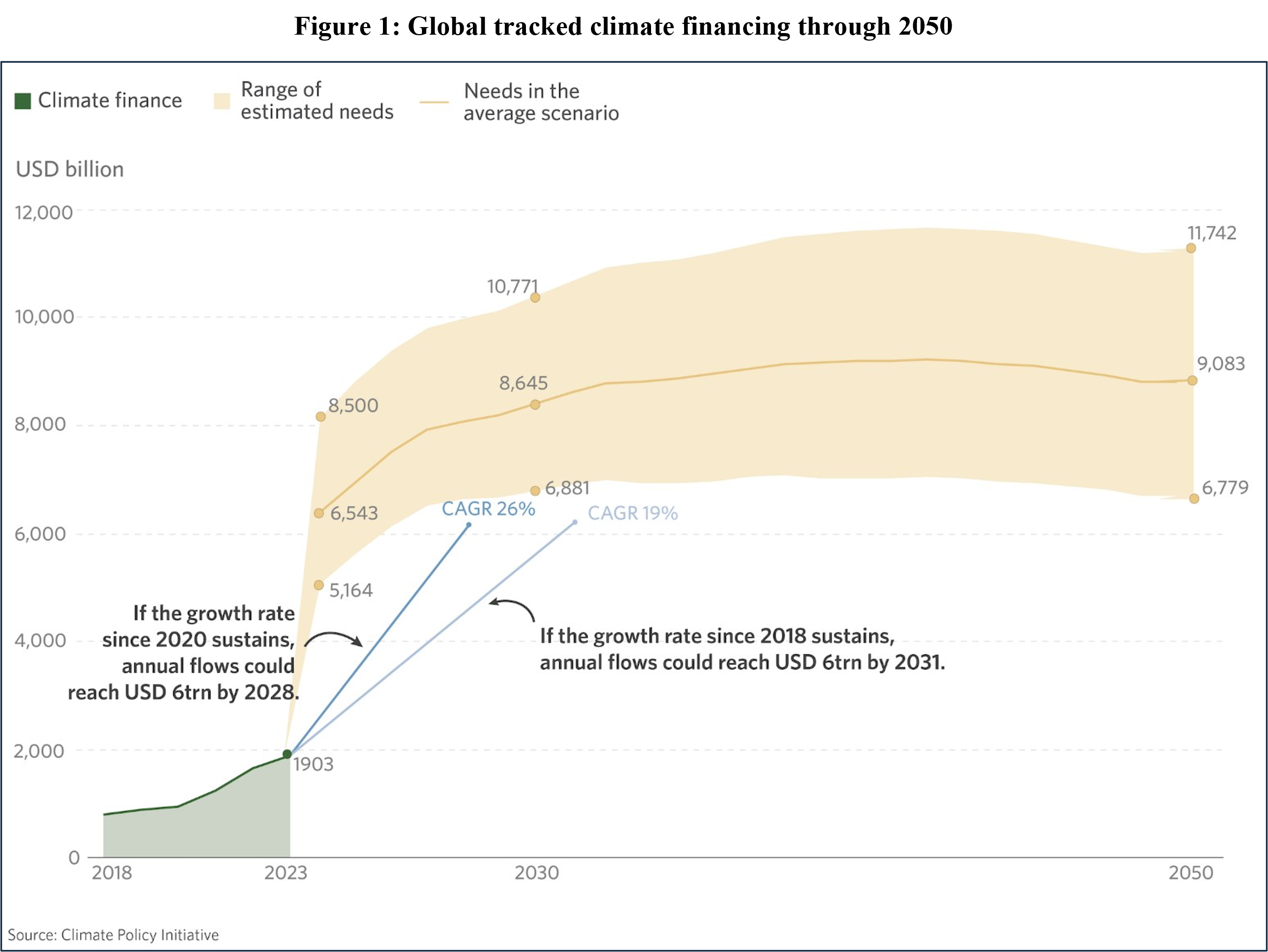
First is the incredible growth of climate-related funding (see Figure 1). The speed and scale of growth create pressures for funds to be disbursed and put stress on due diligence procedures.
-
Second, financing is incredibly complex. Funding sources include both public and private funding, including national governments, national, bilateral and multilateral development finance institutions (DFIs), commercial finance institutions, corporations and individuals. Funding instruments may be a combination of grants, debt and equity, The complexity of the financing chain and technical focus of projects make it hard for members of the public to scrutinize them.
-
Third, when governmental and civil society oversight is weak and political influence shapes decisions, climate change resources may be diverted or projects selected to serve connected actors rather than community priorities.
Although corruption is frequently understood primarily as bribes, non-monetary forms of corruption can be as important in affecting climate finance outcomes and projects. These can include influence peddling and institutional or state capture (when private interests significantly influence a state’s decision-making processes to their own advantage). Non-monetary forms of corruption can also be harder to detect and prosecute since they can be harder for outsiders to observe and therefore act against.
Aside from the basic distinction between monetary and non-monetary forms of corruption, corruption is often divided by analysts into three main levels: Political or electoral corruption, grand corruption, and petty or administrative corruption. All are important and can affect climate finance and projects, meaning that corruption risk assessments are vital to understanding the risks and deciding how to manage them.
…adaption projects, most of the time you rarely give out cash unless…the farmers are participating in a survey and you’re giving them…a small stipend, rarely there’s an exchange of cash for adaptation projects.
But for mitigation, there’s movement of money.
Experiences of corruption
Rebecca reached out to actors in the climate change, human rights, development and corruption fields. A exploratory quantitative survey asked about various challenges in climate change projects as a way of finding people who have experienced corruption. Only results for those who identified corruption issues (n=21) are discussed in this blog. The survey is small and decidedly non-representative. Rebecca posted the survey on LinkedIn, shared it with her contacts and directly contacted NGOs, think tanks and other organizations working on climate change, human rights, corruption and indigenous peoples’ issues. However, despite this worldwide dissemination of the survey, 86% of those respondents came from or worked on projects in Eastern and Southern Africa and one or two worked on projects in Francophone Africa, West Africa-non French, Latin America and South Asia each.
The majority (17/94%) of respondents were employees or consultants for their projects, while one person selected non-employee stakeholder (government, business, association), three selected community member where initiative took place (CBO, CSO, individual, religious leader), and two people indicated they had other roles. Some people reported on a single project, others on multiple projects they have been involved with. Projects ranged from restoring land, water or coastal habitats, flood management, agroecology, tree planting, carbon credits, to early warning systems, supporting communities, livelihoods, WASH and other thematic areas.
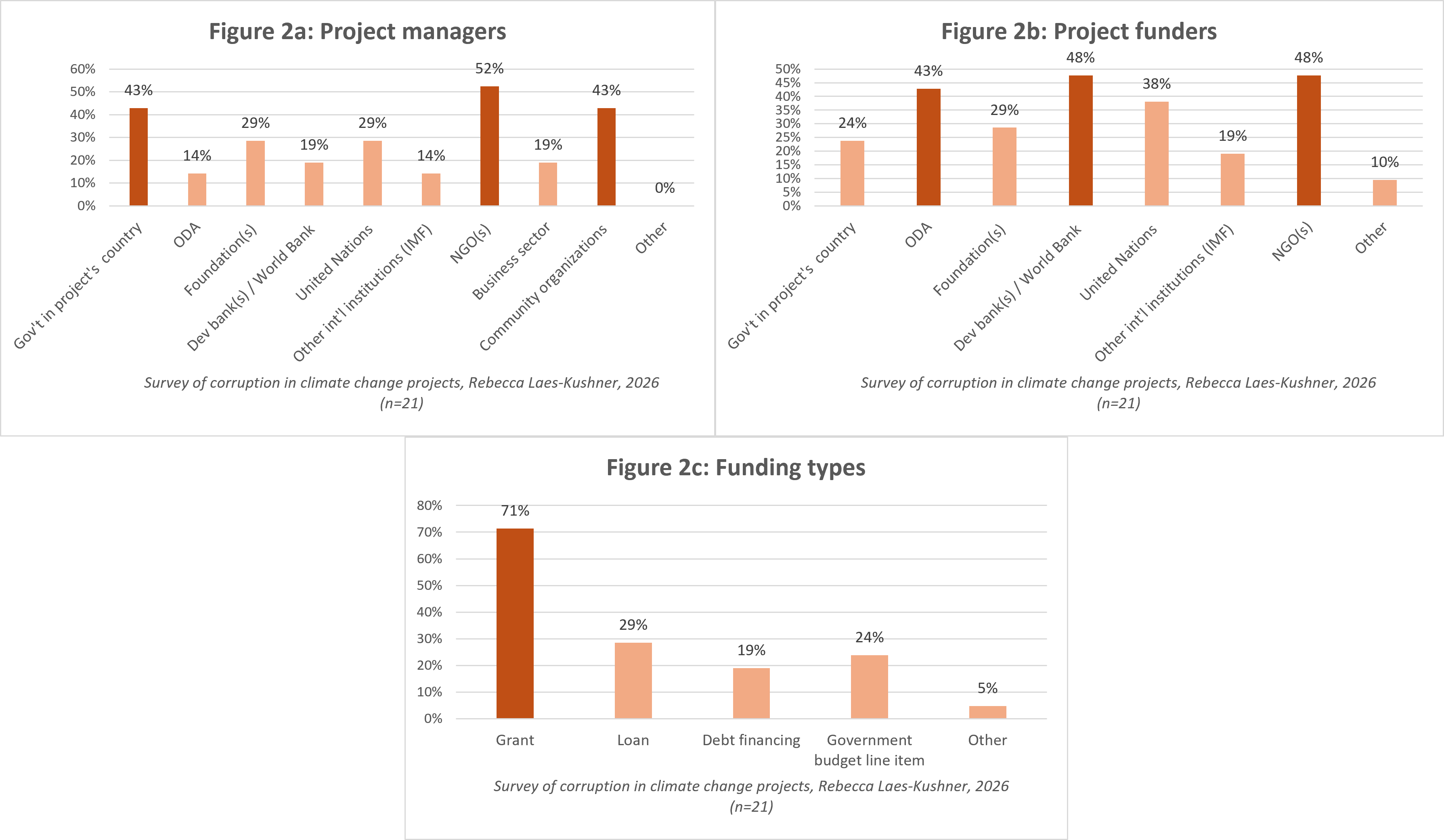
The projects included both climate change mitigation and adaptation projects and over half (11 / 52%) were managed by NGOs.* The most frequent funders were development banks, including the World Bank, and NGOs, followed by official development assistance (ODA). Projects were most often funded by grants (15 / 71%). (see Figures 2a, 2b and 2c)
*respondents could select multiple options for all questions regarding project details, including type of projects, funders, project managers and type of funding.
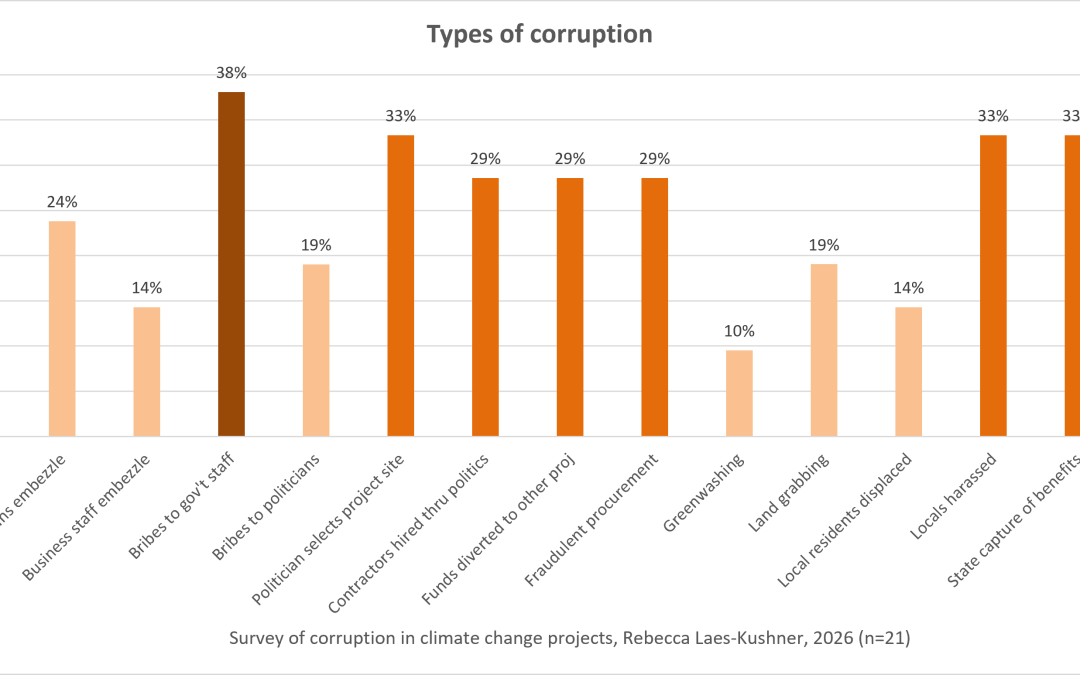
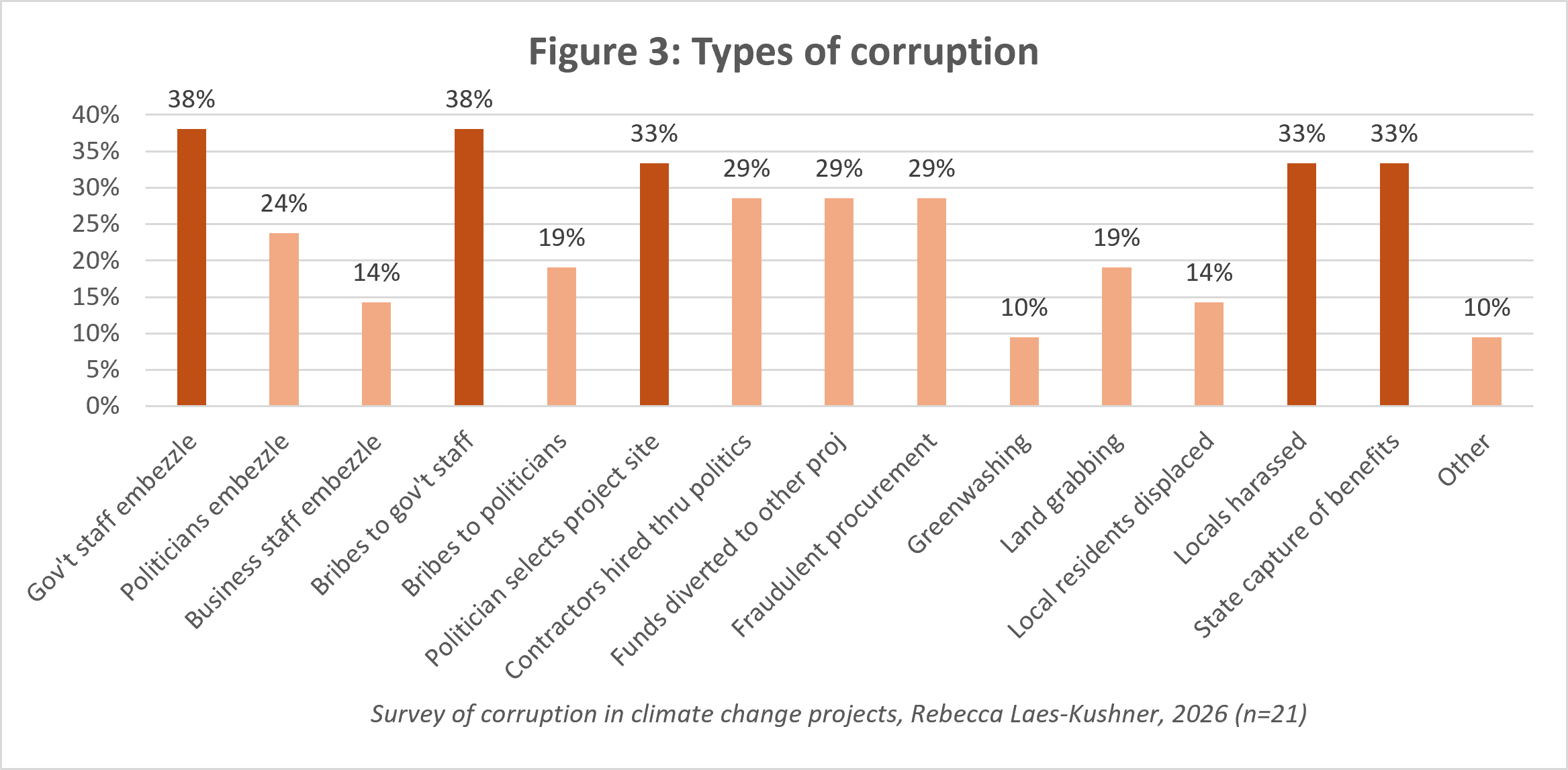
Survey respondents identified that a wide variety of corruption has taken place in projects they have been involved in. Government staff taking bribes and embezzling funds were the most frequently reported concerns, followed by state capture, political influence on project locations and selection of contractors as well as fraudulent procurement (including ghost projects) that divert funds to someone’s pockets and funds funneled into non-climate projects. (see Figure 3)
Almost half (10 / 48%) of respondents identified a single type of corruption they have experienced while 38% selected four or more types of corruption – three respondents (14%) even selecting 8 – 10 types.
Rebecca then held key informant interviews (KII) to go more in depth with respondents about their experiences with corruption.
Read Part 2 of this series to learn the categories of corruption respondents frequently mentioned as well as the solutions both the authors and survey respondents recommend to reduce corruption.
This is a very insightful and important study. It sheds light on the reality of corruption in climate change and development projects, particularly in Eastern and Southern Africa. I appreciate the effort to gather firsthand experiences and highlight how corruption undermines project effectiveness, accountability, and community impact. Such research is essential in promoting transparency, integrity, and better governance in development initiatives.