
Rebecca Laes-Kushner, Bawoke Tesfaye and Belayneh Tilahun
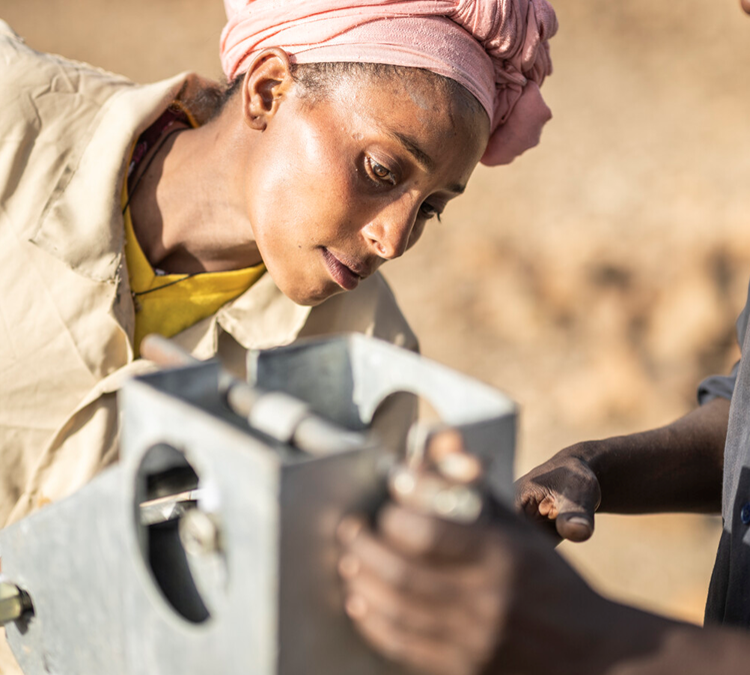
“When a village water system fails, we step in to fix it. Restoring clean water and seeing the community’s joy makes me proud. Thanks to Helvetas for giving me the skills to make this possible.”
— Hareg Mamo, 23, Chair of the YE in Sekota Zuria District
Background
According to the World Health Organization (WHO), one in four people worldwide lacks access to clean and safe drinking #water – 2.1 billion people. In addition, 3.4 billion lack appropriate #sanitation facilities (#toilets), with 354 million defecating in the open.[1] Access to water, sanitation and hygiene (#WASH) remains a challenge, in particular in developing countries.
Governments, NGOs and donors have been attempting to reduce these figures by digging #wells and #boreholes for drinking water and building public and private #latrines.
However, a second problem emerges: the #infrastructure often fails. One-third of #water systems have early failure – defined as occurring within one or two years of construction. Galvanized iron pumps corrode in acidic groundwater, #boreholes are drilled in inappropriate locations and in low-lying areas fecal sludge mixes with floodwaters, contaminating the groundwater. In addition, a lack of robust supply chains means toilets and pumps cannot be repaired. This high failure rate is the dirty secret of the WASH sector, which tends to focus on process-oriented goals (number of wells or toilets built) rather than outcomes (long-term condition of and usage rates of the facilities).
For drinking water infrastructure, community ownership is touted as the solution to ensuring needed repairs are made. A water committee is supposed to collect fees from those who use the pump or well and then spend the money on repairs as needed.
But here, too, problems abound:
- WASH projects often do not include the community at the onset of the project
- Project budget constraints mean the water committee is quickly created at the end of the project
- Committee members lack training in recordkeeping and governance
- Committees often do not collect sufficient fees or fail to set the tariff at a high enough level to ensure there are sufficient funds to conduct the repairs
- Many regions lack sufficient experts to conduct the repairs
- Manufacturers of repair parts often feel it is not profitable to establish a supply chain in rural areas
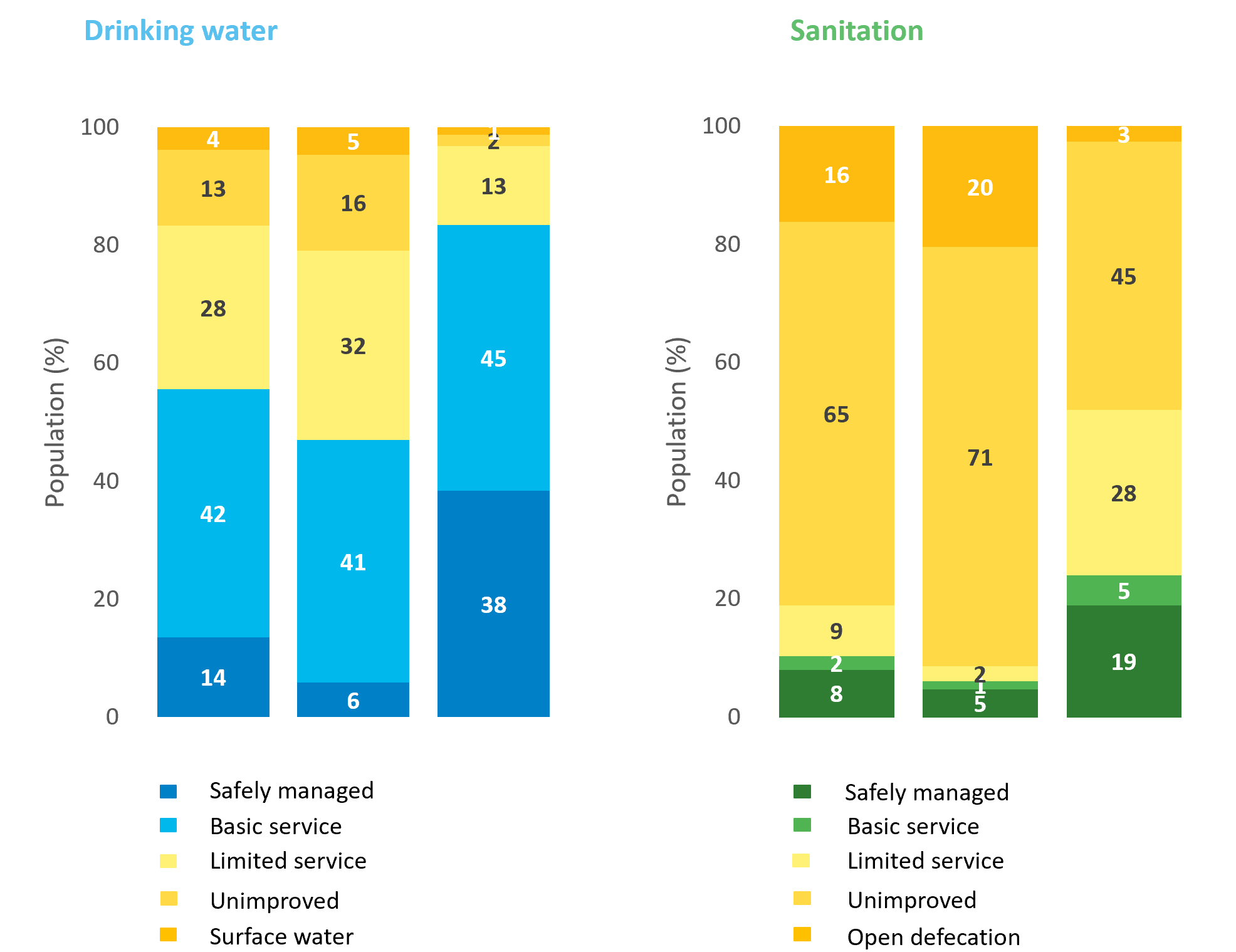
Ethiopia, with Africa’s second largest population at 132 million residents, faces challenges in the provision of WASH services. Only 47% of rural residents have access to safe drinking water (safely managed + basic service), compared with 83% of urban residents. In addition, only 24% of urban and 6% of rural residents have basic or safely managed sanitation services (toilets / latrines).[2]
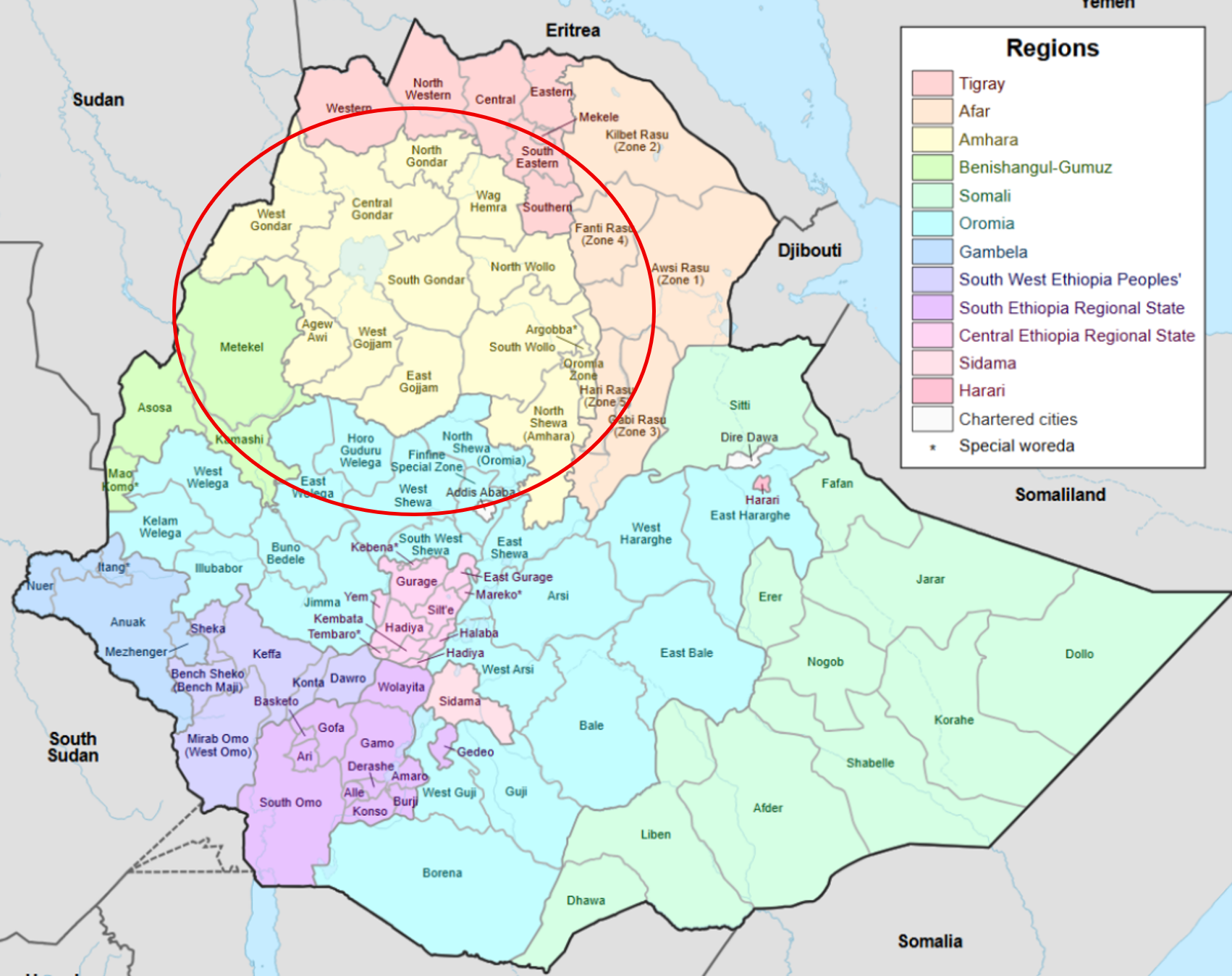
In the regional state of Amhara, 23% of the population of 24 million live in cities while 77% live in rural regions.[3] Per the Ethiopian Statistical Service (ESS), 65% of the region’s population has access to safe drinking water and 27% have at least basic sanitation services.[4] However, many of the water schemes were not functioning – from a low of 7% in the woreda of Hulet Eju to a troubling 45% in the woreda of Wag-Hemra.[5]
Lack of sanitation facilities has an impact on health: A total of 3.9% of children under five in Amhara die from diarrhea – a better rate than 4.6% of the entire country of Ethiopia, but well above the 1.1% rate in high income countries.[6]
Using a market systems development (MSD) approach to tackle the problem
Helvetas, a Swiss development INGO, has used a market systems development (#MSD) approach to tackle the problem of infrastructure failure the Amhara region of Ethiopia.
MSD seeks to solve economic problems by addressing the marketplace holistically – how can the systems that support the marketplace be improved, so the poor are equitably involved as buyers and sellers? The goal of MSD projects is for the market to function independently without repeat intervention by donors and NGOs. When laws are changed, informal rules taken into account, infrastructure and information improved and businesses that provide support functions strengthened, then changes become systematic and sustainable.
An NGO running an MSD project acts as a facilitator – bringing stakeholders together, identifying potential partners, testing which solutions work; the goal is for this “lead” NGO to step back after several years once the market is working.

The solution: training young people to conduct repairs
The issue of wells being not functional is a problem, according to Bawoke Tesfaye, Project Manager for YES-Amhara, with 19% non-functioning in the YES project’s target areas. In prior decades, the government performed maintenance on wells but budget cuts and a focus on other policy areas has meant communities need to cover the costs. The private sector thus has an important role in bridging the gap for WASH repairs.
To improve the long-term functioning of wells in Amhara, Helvetas established the Youth Entrepreneurship for Sustainable Rural Services (YES-Amhara) project in 2021 to train Youth Entrepreneurs (YEs) to repair water infrastructure. As appropriate for MSD projects, Helvetas Ethiopia plays a facilitating role, working with kebele (district) WASHCOs, government agencies (bureaus of water and energy, labor and training offices and finance), training provides (TVET colleges), spare part suppliers and traders.
Financial institutions also play a role: Tsedey Bank provides loan at reasonable interest rates and financial literacy advisory services. In addition, a revolving loan fund of 1.7M Birr (€9,000) was established with Cooperative Societies’ Saving and Credit Union (CSSACU) that YEs can access for capital funds to buy spare parts and repair tools. The average loan has been 250,000 Birr (€1,350).
The project trained young people to become water and sanitation repair people. They were trained in:
- water supply schemes including wells, boreholes and developed springs
- data management – knowing which schemes need repairs
- supply chain logistics – such as the importance of stocking often-used parts
- business management and entrepreneurship
- record keeping and financial management
The project provided a mix of technical and business training tailored to local WASH market opportunities. Training was delivered by qualified experts from TVET institutions, government offices, and private-sector training providers through classroom sessions, practical demonstrations, and apprenticeships. In addition to the technical and business training, the youth learned soft skills such as team building.
Trainees received repair tools, equipment, spare parts, a workspace, and a motorbike for each YE. In addition, the project facilitated formal linkages between the YEs and a spare-parts supplier established by the Regional Water and Energy Bureau in Bahir Dar through signed MoUs. This partnership ensures reliable access to essential spare parts, reduces repair delays, strengthens local maintenance services, and supports the sustainability and growth of youth-led enterprises. All of the YEs have become local distributors of spare parts to WASHCOs and local consumers.
Finally, trainees also received ongoing coaching and mentoring from key partner experts, project staff, and training providers, whom they can contact for additional support in areas such as stock management, business growth, market linkage, and technical troubleshooting.
A total of 68 people, including 23 women, were trained. They established 13 YEs, one each in 13 woredas – districts that span 30 – 60 km across and range between 1,000 km2 – 1700 km2, though travel time is longer in mountainous regions. Trade licenses were acquired for the YEs to provide maintenance services and supply spare parts.
Community access to water
Water sites are fenced off with guards hired to prevent vandalization and to collect fees paid to the WASHCO. Water is only available according to a set schedule, when the guard opens the site with his or her key. Guards will collect money if users pay by jerrycan. Otherwise, fee collection is the primary responsibility of the WASHCO, which collects monthly user fees, manages financial records and ensures proper accountability. The guards are responsible for supervising the water scheme, safeguarding facilities and equipment and maintaining the security of the scheme.
The work of the youth enterprises
The YEs receive preventive maintenance and repair requests from WASHCOs through phone calls, travel to the site to diagnose and fix the problem, and charge service fees and spare part costs. They work on 10-15 water schemes a month on average. They manage minor-level, medium-level, and major-level repairs, including hand pump maintenance and repair, replacement of damaged pumps, repair of leaking pipes and fittings, rehabilitation of water points and repair of latrine and sanitation facilities. Minor repairs can often be completed within a few hours, while more complex repairs requiring spare-part replacement or extensive maintenance may take several days.
The enterprises keep basic records of repairs and inventory, and receive ongoing coaching and business support to improve service quality, sustainability, and business growth.
The repair teams primarily travel by motorbike provided through the project, enabling them to reach water schemes quickly and transport tools and spare parts to repair sites. For areas that are difficult to access by road, they may also travel on foot for the final distance. They are able to provide service quickly to communities in their region – usually within a day, once they receive a call from a community about a problem.
The YEs have repaired over 730 water schemes used by over 300,000 people (one-third women) as of June 2026. They have generated approximately 10M Birr (€52,000) in net revenue, or 147,000 Birr a person (€770) – significant in a region where the average annual income is 24,000 Birr (€130).
An example of success
Ashenafi Molla and five friends received training under the YES project and launched their business in December 2024. They restored 50 water schemes, improving access to clean water for over 1650 households.
In 2025, they expanded their business to produce liquid soap.
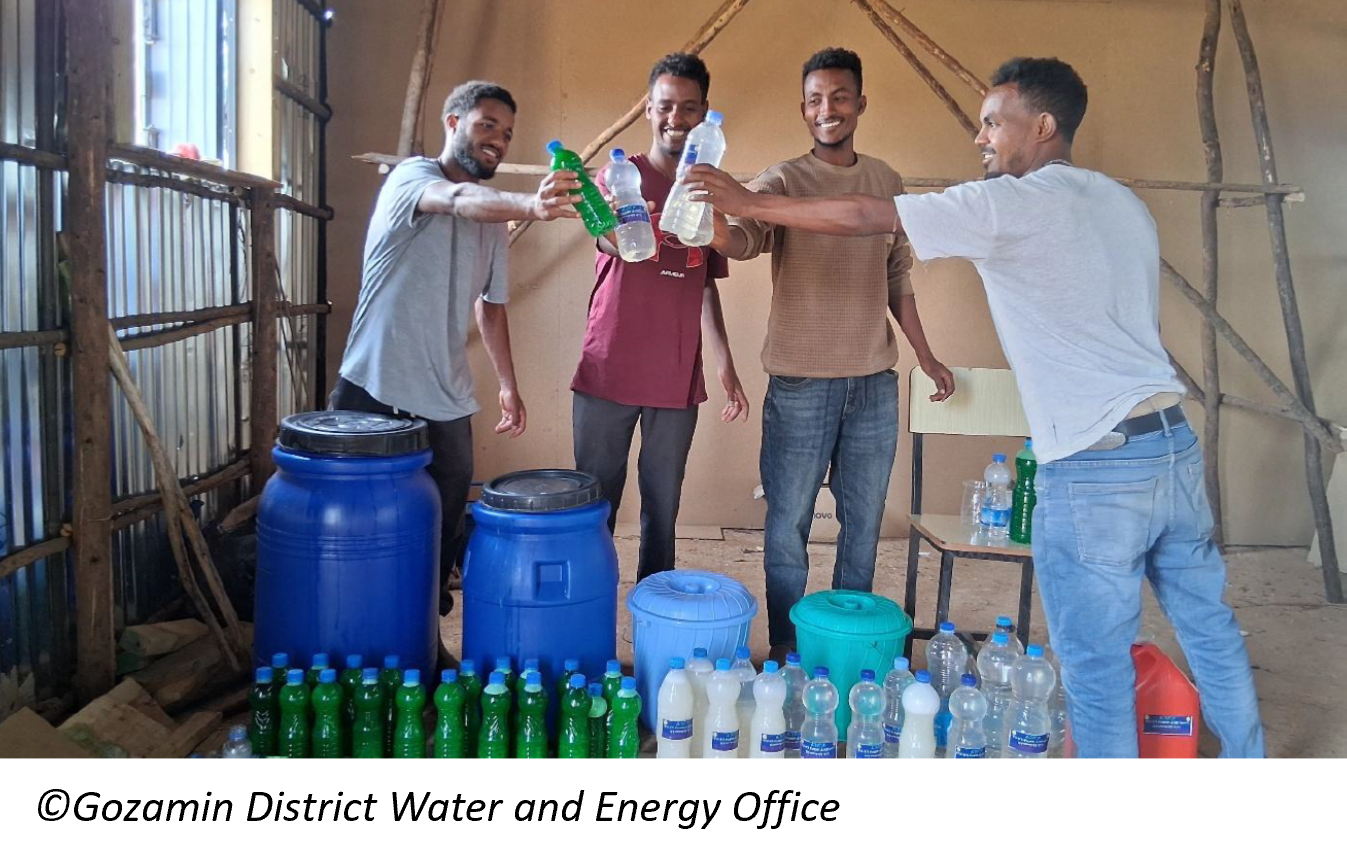
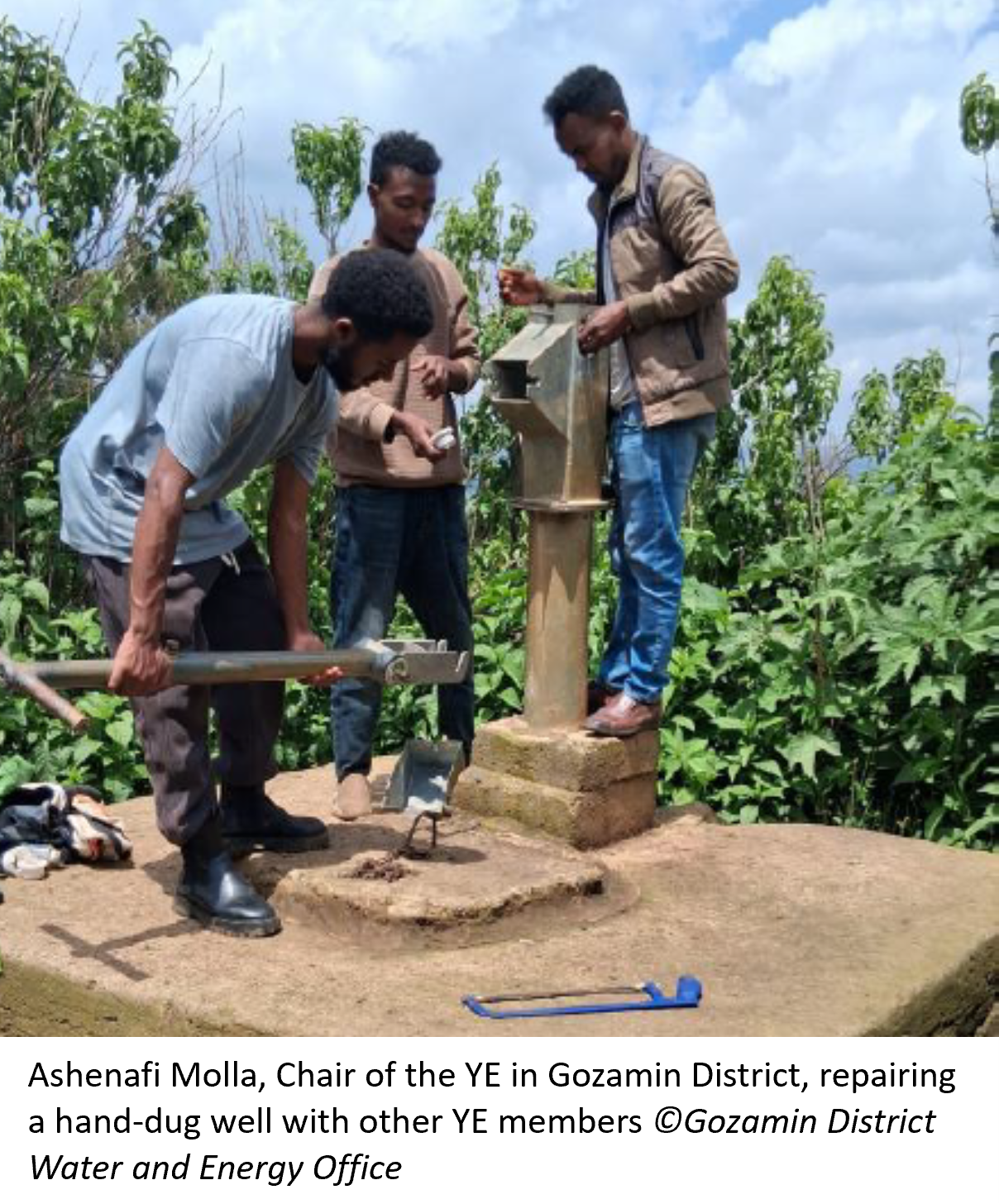
“Four of us had graduated but remained unemployed for a long time. The other two survived on occasional daily work, but their earnings were irregular and barely enough to live on. We depended on our families and had no idea what the future held.”
— Ashenafi Molla, 29, Chair of the YE in Gozamin District
Building the capacity of the WASH committees (WASHCOs) and government
Improving the #watercommittees – called WASH Committees (WASHCOs) – is another pillar of the YES-Amhara project. One major aspect has been registering the WASHCOs with the government so they have legal authority to collect water fees, manage and operate water schemes. To date, over 500 WASHCOs have received legal status and 8M Birr (€42,000) has been collected for operation and maintenance. The legalization of WASHCOs has generated nearly 420 jobs for disadvantaged community members, primarily as water scheme guards.
They also receive training on scheme operation and management, bookkeeping, financial management and the roles needed for a water committee, such as cashier. The WASHCOs also learn to calculate the lifespan of parts to determine expected maintenance costs – and thus the rate they need to set for water usage. In addition, a series of community‑level operation and maintenance fees, hygiene and sanitation, and the internalization of WASHCO by‑laws.
In addition, Helvetas trained officials and experts in the Water and Energy, Labor and Skills and Finance Bureaus on how to coach and give feedback and provide training to YEs. Government staff actively participate in the planning, facilitation, monitoring, and delivery of WASHCO training activities. Their collaborative involvement promotes joint accountability, strengthens coordination among sectors, and demonstrates strong government ownership and commitment to sustaining project outcomes beyond the project period.
“Helvetas capacitated everyone – all staff should be skilled in WASHCO legalization procedures, WASH service management, youth enterprise development, financial management & record keeping, coaching and mentoring, monitoring, evaluation, digital data management, and multi-stakeholder coordination to effectively support WASHCOs and YEs,” Tesfaye says.
Realistic and validated data are essential for effective planning and decision‑making across different actors. For instance, the Bureau of Water and Energy (BoWE) requires regular and reliable data to inform planning and budgeting. Accurate information on non‑functional schemes enables them to secure budgets and support from federal authorities and INGOs. Similarly, validated data on non‑functionality helps in planning for spare parts procurement and maintenance needs. In parallel, Water Users’ Associations (legalized WASHCOs) benefit from such data by understanding the extent of maintenance required and the resources needed. This allows them to set appropriate operation and maintenance fees and determine the service period for each component of water schemes. In general, realistic and validated data are indispensable for sound planning and sustainable service delivery.
“Children died from unsafe water. Girls missed school, risking attacks and harassment while fetching water. Today, with our legalised WASHCO, scheduled access, and community-funded maintenance, clean water has transformed our lives.” Mr. Eniyew Jember, WASHCO Chairperson, Dabat district (North Gondar Zone)
More than just repairs
What sets this project apart from others that train people to perform maintenance on WASH infrastructure is that YES-Amhara staff perform continuous quality improvement to ensure their solution will be durable. They found the YEs were not earning enough to support the entrepreneurs, so staff began diversifying the young people’s skillsets.
Unfortunately, due to business regulations in Ethiopia, which segregate businesses by thematic area of their license, YEs can’t assist with construction of WASH facilities.
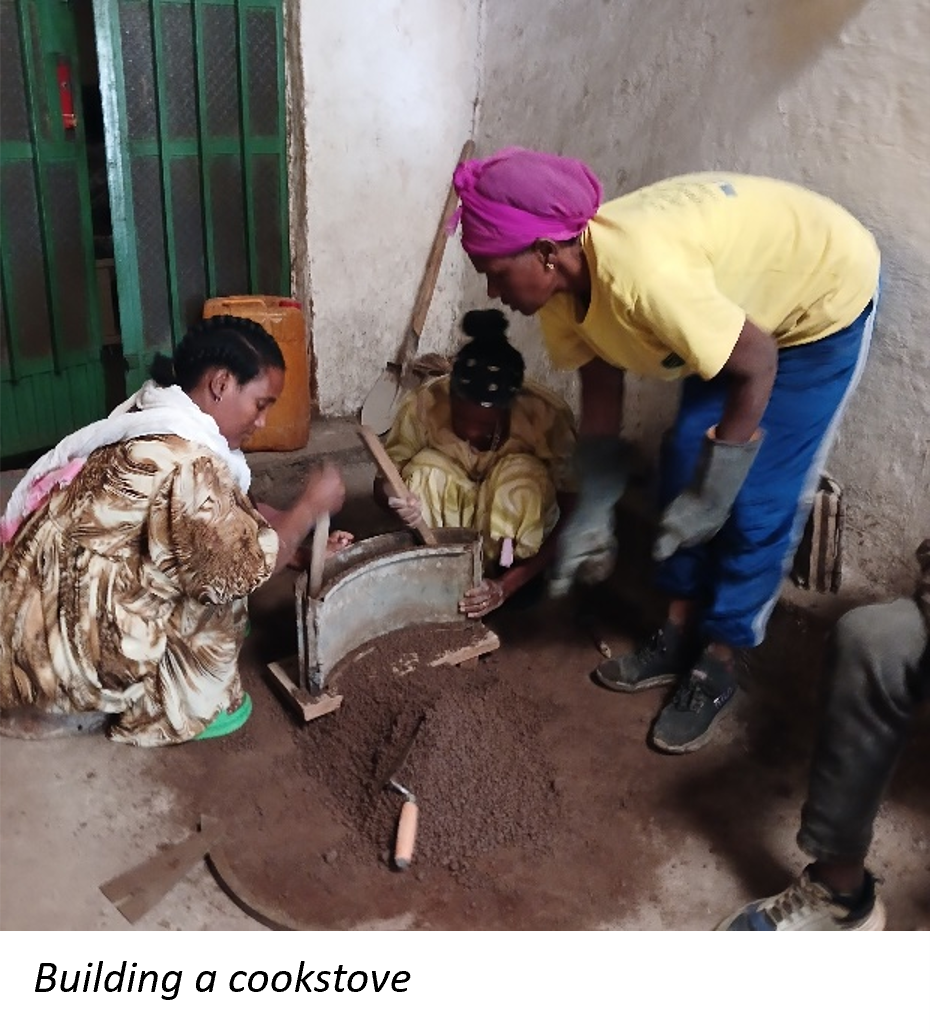
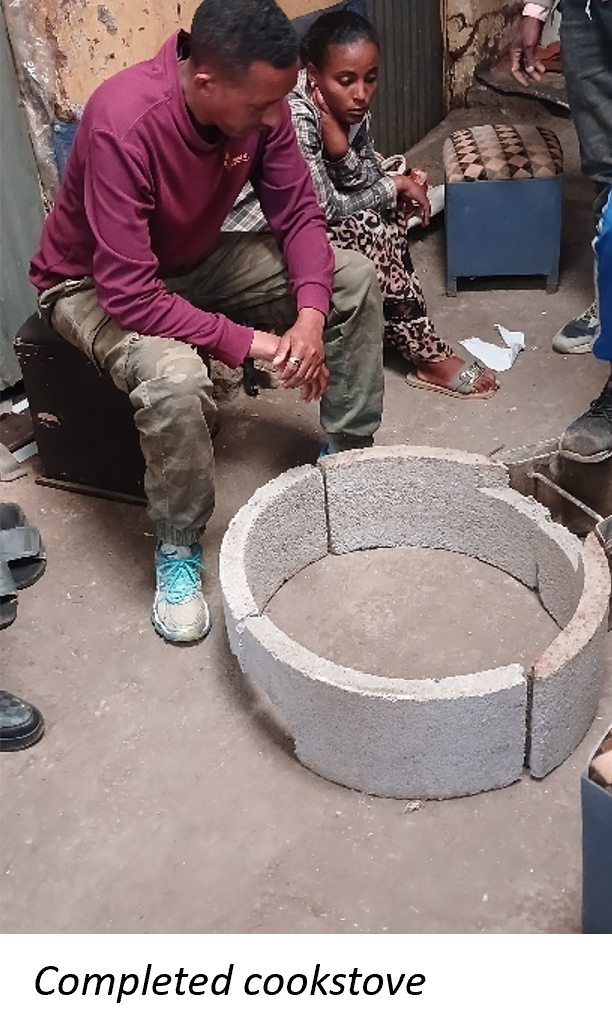
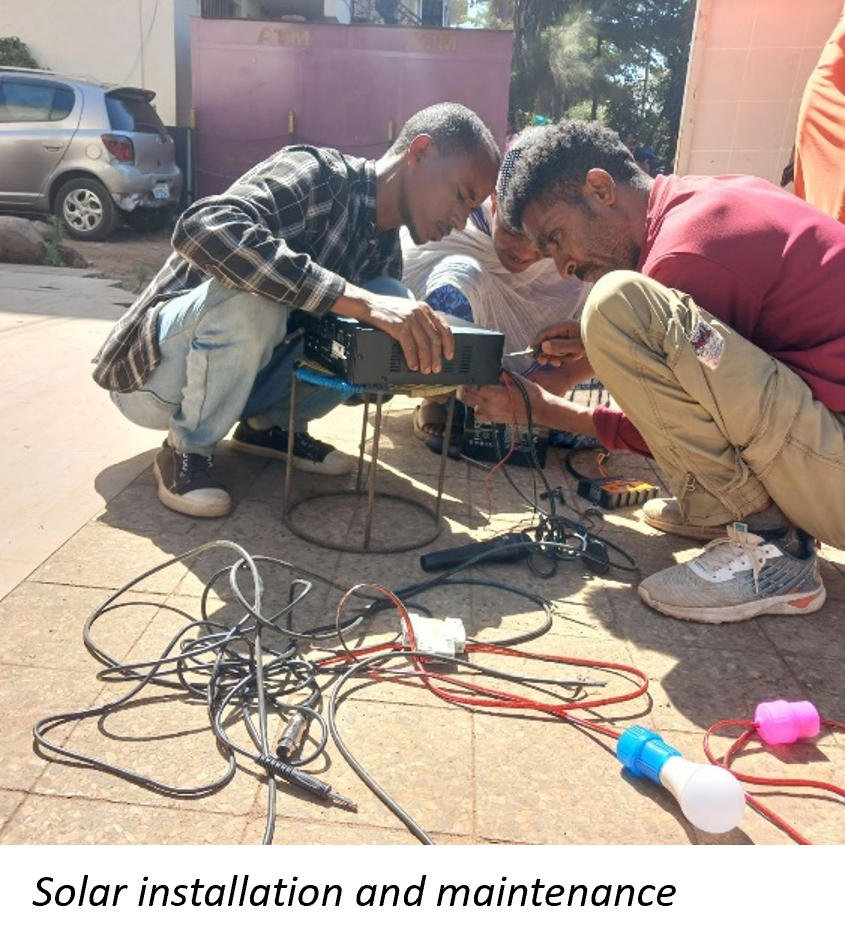
Soap production was identified as a good add-on to WASH infrastructure repair. 26 entrepreneurs representing 13 YEs were trained on how to make soap and the YEs were connected with CSSACU and Tsedey Bank’s revolving funds, which provided loans to enable the YEs to purchase chemicals and equipment to produce soap. The YEs also learned how to perform water quality tests and treatments. The project has added a course in making energy efficient, portable cookstoves out of sand and cement that use less wood, leading to lower costs and less indoor smoke. There are also classes in solar installation and maintenance.
Access to finance
Micro, small and medium businesses (#MSMEs) usually lack access to capital. Small businesses do not have the collateral that banks and other lenders require, may have poor record keeping and can have seasonal incomes.
“Helvetas collaborated with the Ethiopian Government Cooperative Commission to advocate for the inclusion of community‑based organizations (CBOs), including youth enterprises (YEs) and legalized WASHCOs, as members of savings and credit cooperative societies (SACCOS) during the revision of the proclamation. The Ethiopian government has now enacted this proclamation, and the issues we raised have been addressed, with our recommendations incorporated into the final text,” said Belayneh Tilahun, Project Officer for YES-Amahara.
These cooperatives first build a culture of saving among the YEs and then help ensure sustainability of the enterprises by enabling members to receive loans repeatedly after they have repaid existing loans in full. The proclamation opens the cooperatives to YEs by identifying them as community-based organizations (CBOs). YEs are now able to improve their savings and access credit by using their #savings and the guarantee of fellow members as collateral, which makes borrowing easier compared to other microfinance institutions (#MFI).
This proclamation benefits not only YEs but also WASHCOs. It allows legalized WASHCOs to become members of savings and credit cooperative societies. The substantial resources held by WASHCOs can strengthen the capital base of these cooperatives, while WASHCOs themselves gain the opportunity to access #loans whenever their funds are insufficient to cover maintenance costs.
“This is a great opportunity. Finance remains a key issue for diversifying businesses and ensuring adequate services for the community. Our team is proud that the proclamation has now been approved by the federal government.”
Belayneh Tilahun, Project Officer
Rebecca Laes-Kushner in an NGO consultant. Bawoke Tesfaye is Project Manager for Helvetas’ YES-Amhara Project Manager. Belayneh Tilahun is Project Officer, Youth Employment & Partnership Officer for the YES-Amhara project.
[1] https://www.who.int/news/item/26-08-2025-1-in-4-people-globally-still-lack-access-to-safe-drinking-water—who–unicef
[2] Joint Monitoring Programme (JMP) for Water Supply, Sanitation and Hygiene. Ethiopia. (August 2025) https://washdata.org/data/household#!/ETH
[3] Amhara Regional Bureau of Planing and Development – Annual population projection based on census data
[4] Ethiopian Statistical Service (ESS). Ethiopia: 2024–25 Demographic and Health Survey Summary Report. https://ess.gov.et/wp-content/uploads/2026/07/ethiopia-demographic-and-health-survey-edhs-2024_25-summary-report.pdf
[5] Helvetas, per Bureau of Water and Energy report 2023 (checked & updated by the respective woreda Water office communications)
[6] https://vizhub.healthdata.org/gbd-results/