
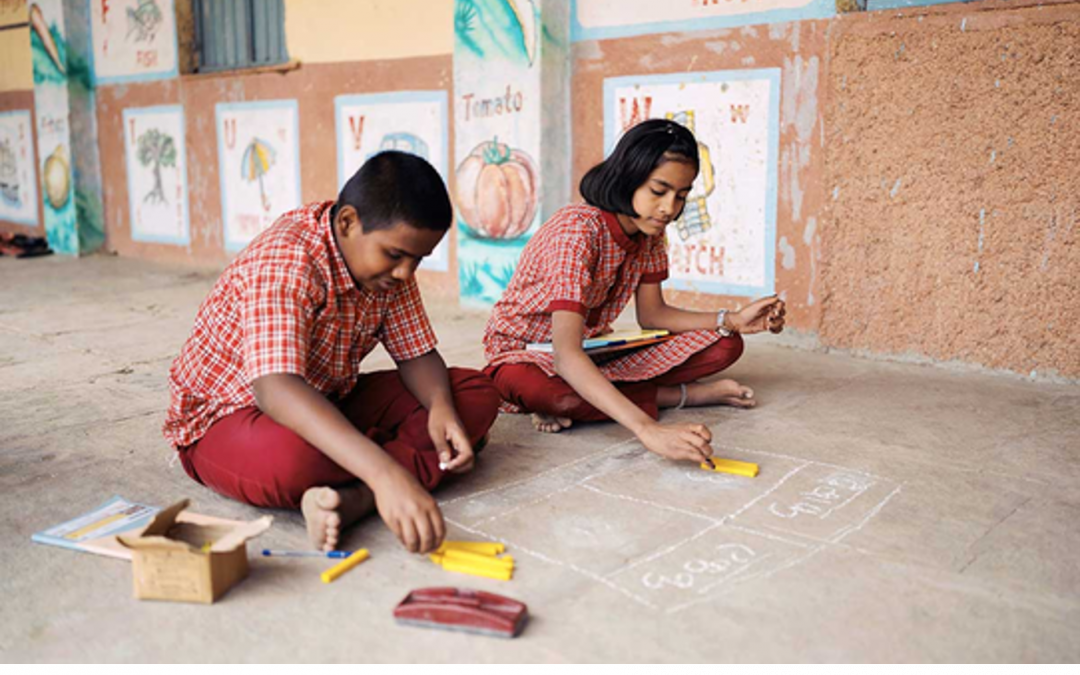
53% of children in low- and middle-income countries cannot read and understand a simple story by the end of primary school. In poor countries, the level is as high as 80%, according to the World Bank. In sub-Sarahan Africa, 89% of children are unable to read and understand an age-appropriate text by age 10.
Research from the World Bank and other organizations has shown that although children may attend school, they don’t learn and can’t read, write and do mathematics at grade level. The World Bank calls this issue learning poverty.
How can children be brought up to grade level?
The answer lies in not teaching them by grade, but by ability. Called Teaching at the Right Level (#TaRL), the practice involves grouping children by ability and providing them with supplemental instruction during or after class or during school vacations. TaRL starts with where each child is academically and begins instruction there.
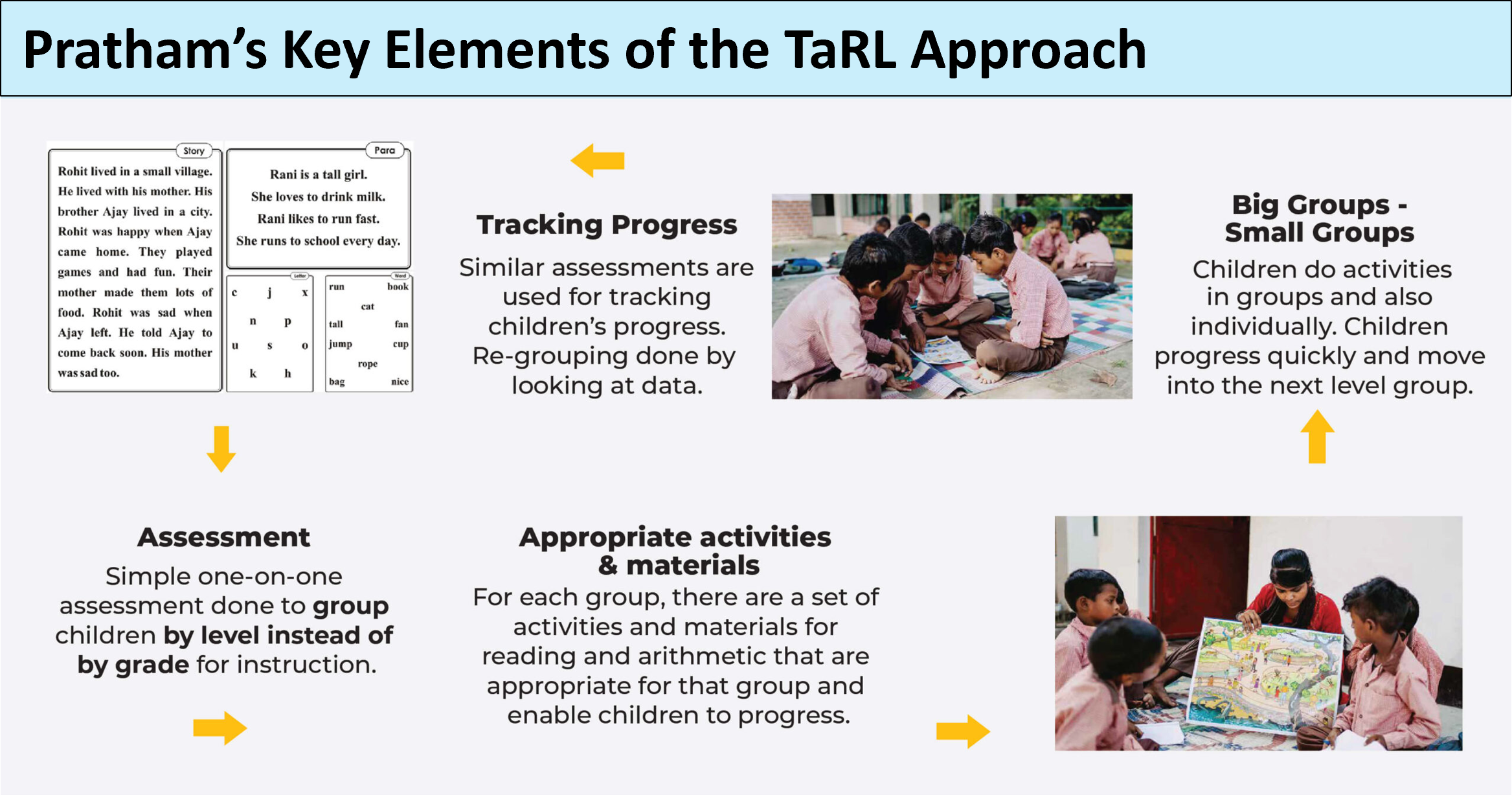
- Children in several consecutive grades are assessed through one-on-one testing. For reading, they are given a paragraph; if they can’t read and understand it, then they are given sentences, then words and finally letters.
- Children are then grouped based on ability level.
- They are taught using fun and interactive activities, such as pulling letters from a bowl, working in small groups to make sentences from words on pieces of paper and drawing mindmaps in chalk on the floor.
For a reading activity, children will be told the subject of the story and encouraged to say words related to the subject; the teacher then reads the story slowly, the class discusses it and finally children volunteer to read the story again to the class while their classmates follow in their own books.
- The children work in small groups, large groups and individually, moving around the classroom over over a couple of hours.
- They are then assessed and their progress is tracked. Children are moved into higher groups as soon as they are proficient.
Children are taught by teachers and by volunteers, all of whom are trained in the TaRL method.
It’s as simple as that – and as complicated, as repeat training may be needed to ensure the instructions correctly follow the TaRL method or the method is best adapted to the local context.
The approach is evidence-based, with multiple studies proving its effectiveness in moving children up grade levels in reading and math.
TaRL has moved beyond India. Teaching at the Right Level Africa works with over 17 countries. TaRL Africa partners with governments to adapt and test solutions within their context, including:
- Adapting TaRL materials to reflect local languages, cultures, and curriculum frameworks
- Strengthening government implementation capacity through training and support
- Iterating pilot programs and learning from results to refine approaches before scaling
Again, research studies have proven the effectiveness of the TaRL approach in Africa.
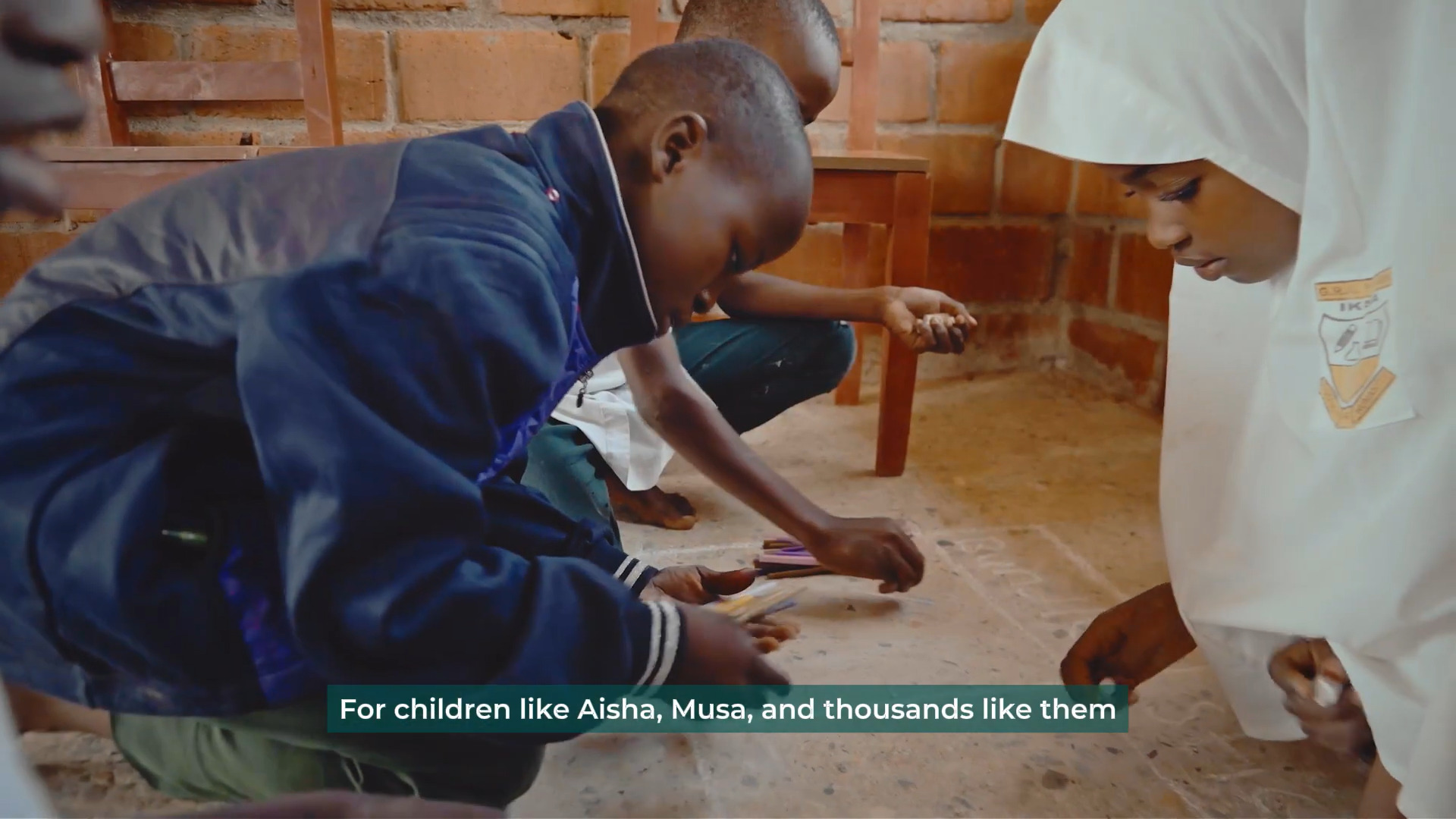
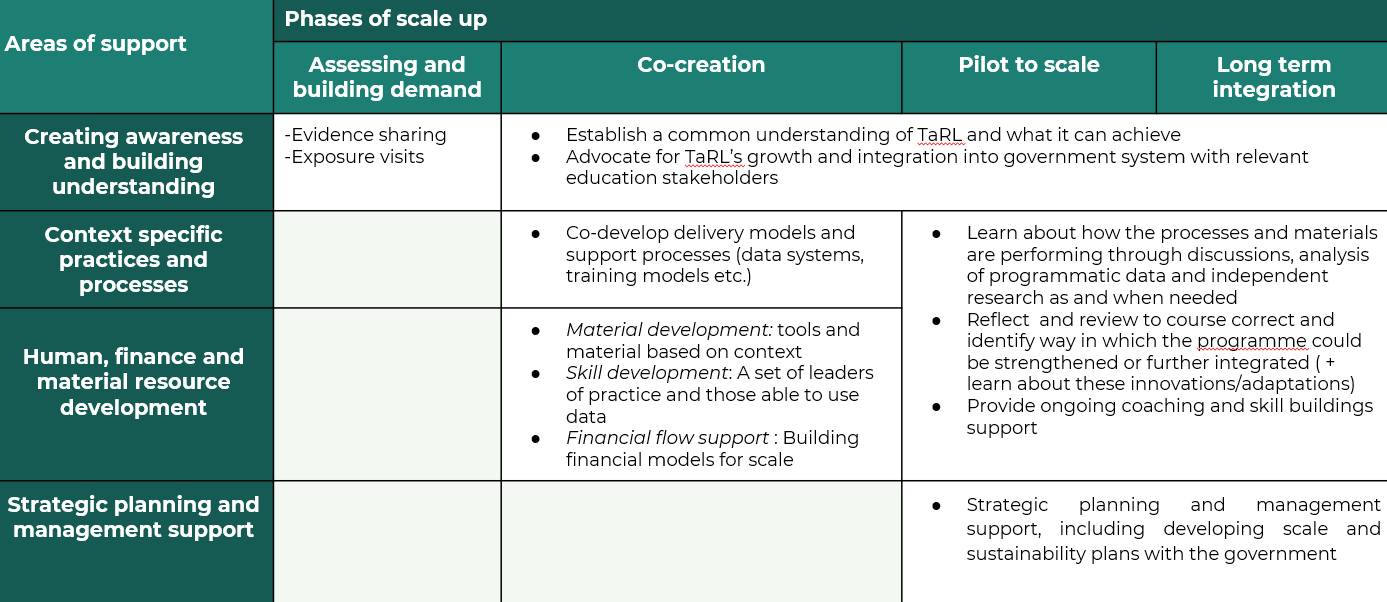
TaRL Africa’s approach to empowering governments
The Global Education Evidence Advisory Panel (GEEAP) lists TaRL as a “Great Buy” in its report Cost-Effective Approaches To Improve Globalto Improve Global Learning Learning, which identified high-quality evaluation studies in various areas of pedagogy, school organization and parental engagement.
Given the proven effectiveness of the TaRL method, the question is why more donors and governments don’t adopt the approach. Without basic reading and math skills, children may be destined for lower-paying, often unskilled labor as adults. Bringing children up to grade level in school is critical for the economies in low-income countries.